
Fiberglass tape is a high-performance composite material widely utilized across various industries. Its exceptional strength, thermal resistance, and insulating properties make it an indispensable solution for reinforcement, protection, and insulation. This article will explore the key characteristics, manufacturing process, primary application areas, and distinct advantages of fiberglass tape to enhance understanding and promote its effective use.
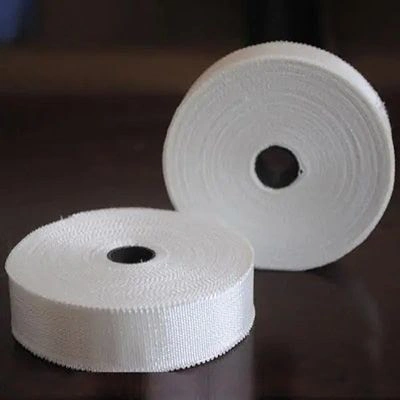
1. Key Characteristics of Fiberglass Tape
High Tensile Strength: Woven from continuous fiberglass filaments, the tape exhibits remarkable strength-to-weight ratio, providing robust reinforcement without adding significant bulk.
Excellent Thermal Resistance: Capable of withstanding extreme temperatures, it performs reliably in environments ranging from sub-zero conditions to over 500°C, making it ideal for insulation and heat protection.
Superior Chemical & Corrosion Resistance: The material demonstrates strong resistance to most acids, alkalis, and solvents, ensuring long-term durability in harsh chemical environments.
Effective Electrical Insulation: With outstanding dielectric properties, fiberglass tape serves as a reliable insulator in electrical and electronic applications.
Abrasion & Tear Resistance: Its durable woven structure provides excellent resistance to wear, tearing, and fraying, even in high-friction scenarios.
2. Manufacturing Process of Fiberglass Tape
Fiberglass tape is primarily manufactured through a precision weaving process. First, high-quality glass fibers are drawn and bundled into continuous yarns. These yarns are then woven on specialized looms to create a tight, consistent fabric. The woven tape is often treated with coatings—such as silicone, acrylic, or graphite—to enhance specific properties like heat resistance, adhesion, or friction reduction. Finally, the material is cured, slit to precise widths, and wound onto spools for distribution.
3. Primary Application Areas of Fiberglass Tape
Electrical Industry: Used for insulating motors, transformers, and cables, as well as bundling and protecting wiring harnesses due to its non-conductive and heat-resistant nature.
Construction & Infrastructure: Employed in reinforcing joints in drywall, pipes, and ductwork, as well as in composite manufacturing for added structural integrity.
Aerospace & Automotive: Critical for heat shielding, wrapping exhaust components, and insulating high-temperature areas in engines and airframes.
Industrial Manufacturing: Serves as a protective wrap for hot surfaces, insulation for industrial equipment, and reinforcement in the production of fiberglass composites.
Shipbuilding & Wind Energy: Used in the construction and repair of hulls, as well as in reinforcing wind turbine blades, leveraging its strength and resistance to environmental factors.
4. Advantages of Fiberglass Tape
High Strength & Lightweight: Provides exceptional reinforcement while maintaining a low weight, reducing overall system load.
Versatility & Adaptability: Can be coated or treated for specific functions, making it suitable for a vast range of industrial challenges.
Durability & Long Service Life: Resists heat, chemicals, moisture, and UV exposure, ensuring reliable performance over extended periods.
Safety Compliance: Often meets industry standards for flame retardancy and electrical insulation, contributing to safer operational environments.
Ease of Handling & Application: Flexible and easily cut or wrapped, it simplifies installation in complex or confined spaces.
If you would like to find out more about Fiberglass tape or to purchase other products, please contact us at sales@weitengroup.com, wwww.weitengroup.com.
MOBILE / WHATSAPP86-18561739639
ADDRESSNo.27, Baoyuan Rd, Gaoxin District, Qingdao,China.
 WEITEN GROUP
Copyright © 2026 by WEITEN GROUP All Rights Reserved Designed by HUISHANG MEDIA