
Double jacket gaskets have long been recognized as a dependable sealing solution in demanding industrial environments. Combining the strength of metal jackets with the resilience of soft filler materials, these gaskets offer exceptional performance in applications involving extreme temperatures, high pressures, and corrosive media. They are widely used across oil & gas, petrochemical, power generation, and refining industries.
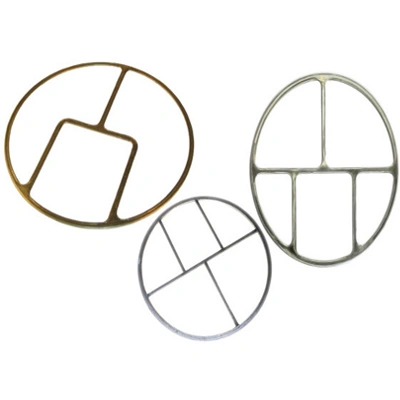
A double jacket gasket consists of a metal outer jacket that wraps around a soft, compressible filler material. Unlike single jacket gaskets, the double jacket design encases the filler from both the inner and outer diameters, providing better protection and enhanced sealing performance.
The typical construction includes:
Metal Jackets: Usually made from stainless steel, carbon steel, Monel, Inconel, or other alloys
Filler Material: Commonly graphite, PTFE, ceramic fiber, or non-asbestos materials
Reinforcement: Some designs include inner and outer metal rings for additional strength and positioning
This construction allows the gasket to conform to flange irregularities while maintaining excellent pressure retention and blow-out resistance.
Double jacket gaskets offer several important benefits over other gasket types:
High Pressure Resistance: The metal jacket provides strength to withstand high bolt loads and internal pressures
Wide Temperature Range: Depending on filler and jacket materials, service temperatures range from -200°C to over +800°C
Chemical Compatibility: Metal jackets can be selected for resistance to specific acids, alkalis, and solvents
Excellent Recovery: The compressed filler provides good relaxation and recovery properties
Blow-Out Resistance: The double jacket design contains the filler, preventing extrusion
Due to their durability and versatility, double jacket gaskets are used in:
Oil & Gas:
Pipelines, valve connections, pump housings, and compressor casings
Petrochemical:
Heat exchangers, reactors, columns, and high-temperature piping systems
Power Generation:
Steam turbines, boiler access covers, and condenser connections
Refining:
Crude units, catalytic crackers, and high-pressure process lines
Component | Common Materials | Key Properties |
Jacket | 304/316 SS, CS, Monel, Inconel | Corrosion resistance, strength |
Filler | Graphite, PTFE, Ceramic | Temperature tolerance, compressibility |
Windings | Precision-formed metal strip | Uniform density, consistent sealing |
Temperature guidelines:
Graphite filler: -200°C to +550°C
PTFE filler: -200°C to +260°C
Ceramic filler: Up to +900°C
Pressure ratings: Suitable for Class 150 to Class 2500 and beyond
Double jacket gaskets provide a reliable, cost-effective sealing solution for high-temperature and high-pressure applications across multiple industries. Their proven design combines metal strength with filler resilience, offering excellent performance where standard gaskets may fail.
MOBILE / WHATSAPP86-18561739639
ADDRESSNo.27, Baoyuan Rd, Gaoxin District, Qingdao,China.
 WEITEN GROUP
Copyright © 2026 by WEITEN GROUP All Rights Reserved Designed by HUISHANG MEDIA