
Basic Concepts
Ring gaskets also known as metal ring gaskets or ring-joint gaskets—are specialized high-pressure sealing gaskets designed for use with RTJ (Ring-Type Joint) flanges. They consist of a solid, closed metal ring that fits entirely into a machined trapezoidal groove on the flange face; tightening the bolts compresses and deforms the metal ring, causing it to fill the groove and create a seal.
Unlike standard flat flange gaskets, these rely on line contact to withstand pressure, offering far superior pressure resistance compared to conventional rubber or PTFE gaskets. They serve as critical sealing components in high-pressure applications and are commonly used with pipelines, valves, and pressure vessel flanges.
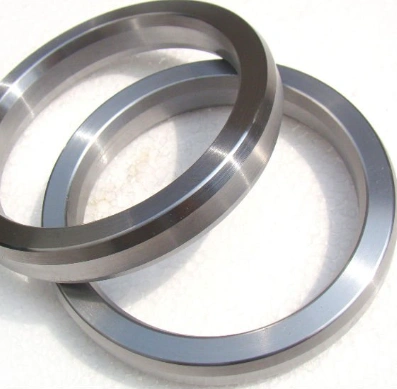
Advantages of Ring Joint Gasket
1. Exceptional Pressure Resistance:
Suitable for ultra-high-pressure applications ranging from PN40 to the Class 2500 rating (and above); it is the preferred choice for oil and gas wellheads and high-pressure chemical pipelines - applications where standard flat gaskets are inadequate.
2. High Stability in High-Temperature Conditions:
Constructed entirely of metal, it offers excellent high-temperature resistance; it does not soften, age, or fail when exposed to high-temperature steam or the high-heat pipelines found in refining and chemical processing.
3. Superior Sealing Reliability and Leak Resistance:
Seated within a flange groove, it is not easily dislodged by the process medium; it maintains a stable seal despite vibration or pressure fluctuations, effectively minimizing leakage risks in pipelines carrying flammable, explosive, or toxic media.
4. Corrosion Resistance and Long Service Life:
Available in materials such as 304 and 316L stainless steel or Hastelloy; it resists corrosion from oil, gas, seawater, and mild acids or alkalis, ensuring minimal wear during long-term operation.
5. Easy Positioning and Installation:
The flange groove secures the gasket in place, preventing misalignment during installation and facilitating easy removal and reinstallation during maintenance.
Main Types of Ring Joint Gasket
1. Classification by Shape/Structure:
(1). Oval Ring Gasket (Oval):
Features an oval cross-section; easy to install and remove with high tolerance for misalignment. Most commonly used for small-to-medium high-pressure valves and pipelines; highest market volume.
(2). Octagonal Ring Gasket (Octagonal):
Features a regular octagonal cross-section; fits more tightly into trapezoidal grooves. Offers superior pressure-bearing and sealing performance compared to oval gaskets; widely used in ultra-high-pressure wellheads and refining units.
(3). RX-Type Ring Gasket:
Specifically designed for compact high-pressure flanges; features an integrated pressure-relief structure. Commonly used in oil and gas wellheads and high-pressure oil extraction equipment.
(4). BX-Type Ring Gasket:
Designed for ultra-high-pressure applications; fits specialized wellhead flanges. Offers the highest pressure rating; exclusive to oilfield applications.
2. Classification by Material:
(1). Soft Iron (Low Carbon Steel): Best cost-performance ratio; standard for ambient-temperature oil/gas and non-corrosive pipelines.
(2). 304 Stainless Steel: General-purpose corrosion-resistant option; suitable for tap water, general chemical processing, and gas pipelines.
(3). 316L Stainless Steel: Chloride-ion resistant; the preferred choice for seawater, coastal pipeline networks, and mildly corrosive conditions (commonly used in coastal projects in Turkey).
(4). Hastelloy & Monel: For strong acid/alkali and highly corrosive chemical environments; high cost.
(5). Metal-Clad Flexible Graphite Gasket: Combines sealing and cushioning properties; used for pipelines subject to significant temperature fluctuations.
3. Classification by Standards:
(1) US Standards: API 6A, ASME B16.20 (Widely used in global trade)
(2) Chinese Standards: GB/T 1803
(3) German (DIN) and European (EN) Standards
Applications of Ring Joint Gasket
1. Oil and Gas Industry (Largest Market):
Standard sealing components for long-distance high-pressure natural gas pipelines, oilfield wellheads, LNG storage tanks, and high-pressure flanges at pressure-regulating stations.
2. Oil Refining and Coal Chemical Plants:
Sealing for flammable and explosive chemical media in high-temperature, high-pressure reactors, heat exchangers, and high-pressure valve flanges.
3. Power Generation (Thermal and New Energy):
Sealing for high-temperature, high-pressure applications, including boiler main steam pipelines and high-pressure water-cooling units.
4. Marine Engineering and Shipbuilding:
Seawater-corrosion-resistant sealing for offshore drilling platform pipelines and high-pressure piping on ocean-going vessels.
5. Pressure Vessel Industry:
Sealing for manholes and flanges on high-pressure gas storage tanks and high-pressure reactors.
If you would like to find out more about Ring Joint Gasket, please contact us at export@weitengroup.com, www.weitengroup.com.
MOBILE / WHATSAPP86-18561739639
ADDRESSNo.27, Baoyuan Rd, Gaoxin District, Qingdao,China.
 WEITEN GROUP
Copyright © 2026 by WEITEN GROUP All Rights Reserved Designed by HUISHANG MEDIA