
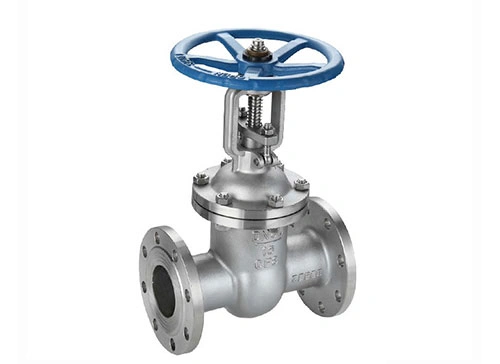
Stainless steel valves are widely used industrial components, primarily applied in sectors such as machinery, environmental protection, petrochemicals, chemicals, and urban construction. Specifically: stainless steel ball valves are mainly used in the petroleum, chemical, and metallurgical industries; stainless steel butterfly valves are predominantly found in petrochemical and metallurgical applications; stainless steel check valves are primarily utilized in metallurgy, chemicals, and petrochemicals; stainless steel globe valves are mainly applied in the petroleum and chemical sectors; throttle valves are chiefly used in metallurgy, petrochemicals, chemicals, and power generation; stainless steel gate valves are primarily applied in chemicals, power generation, and urban construction; control valves are mainly used in chemicals, metallurgy, power generation, and the food industry; and pressure-reducing valves are primarily applied in petrochemicals, chemicals, and metallurgy.
As a universal component, valves are widely utilized across numerous industries; however, the primary objectives for their application within each sector generally fall into three categories:
1. Requirements for routine inspection and maintenance;
2. Supporting infrastructure for newly constructed projects;
3. Reserves for emergency response and unforeseen incidents.
Market Development Trends for Valves
Due to shifts in user demand, the market trajectory for valve products is also undergoing corresponding changes. Over the coming period, the key development trends are expected to be as follows:
1.As petroleum exploration and production shift toward inland and offshore oilfields—and as the power generation industry evolves from thermal power plants with capacities under 300 MW to larger-scale thermal plants (over 300 MW), hydropower, and nuclear power—valve products must adapt their performance characteristics and technical parameters to align with the changing application environments of the associated equipment.
2.Urban infrastructure systems typically utilize a large volume of low-pressure valves. There is a growing trend toward environmentally friendly and energy-efficient solutions—specifically, a transition away from traditional low-pressure cast-iron or stainless steel gate valves toward eco-friendly rubber-lined valves, balancing valves, metal-seated stainless steel butterfly valves, and concentric stainless steel butterfly valves. Furthermore, oil and gas transmission projects are increasingly moving toward pipeline-based networks, creating a significant demand for slab gate valves and stainless steel ball valves.
3.A corollary to energy development is energy conservation. Therefore, from an energy-saving perspective, there is a need to develop advanced steam traps and to advance valve technology toward high-parameter applications suitable for subcritical and supercritical operating conditions.
4.The construction of power stations is trending toward larger-scale facilities. Consequently, there is a growing demand for large-diameter, high-pressure safety valves and pressure-reducing valves, as well as for valves capable of rapid opening and closing operations.
5. To meet the comprehensive requirements of large-scale engineering projects, the supply of valves is evolving from a focus on single product types toward offering a diverse range of product varieties and specifications. There is a growing trend for a single valve manufacturer to supply the entirety of the valves required for a given engineering project.
Over the coming years, the overall trend for valve demand is projected to be upward; as a widely utilized industrial commodity with a high volume of consumption, the demand for valves is expected to experience steady growth. Specifically, the valve types with the highest demand—listed in descending order—are: stainless steel ball valves (15.5%), stainless steel globe valves (12.9%), safety valves (12.5%), stainless steel gate valves (12.5%), stainless steel butterfly valves (10.6%), control valves (8.0%), and stainless steel check valves (6.1%).
If you would like to find out more about valves or purchase other products, please contact us at fluid@weitengroup.com, wwww.weitengroup.com.
MOBILE / WHATSAPP86-18561739639
ADDRESSNo.27, Baoyuan Rd, Gaoxin District, Qingdao,China.
 WEITEN GROUP
Copyright © 2026 by WEITEN GROUP All Rights Reserved Designed by HUISHANG MEDIA