
1. Basic Concepts
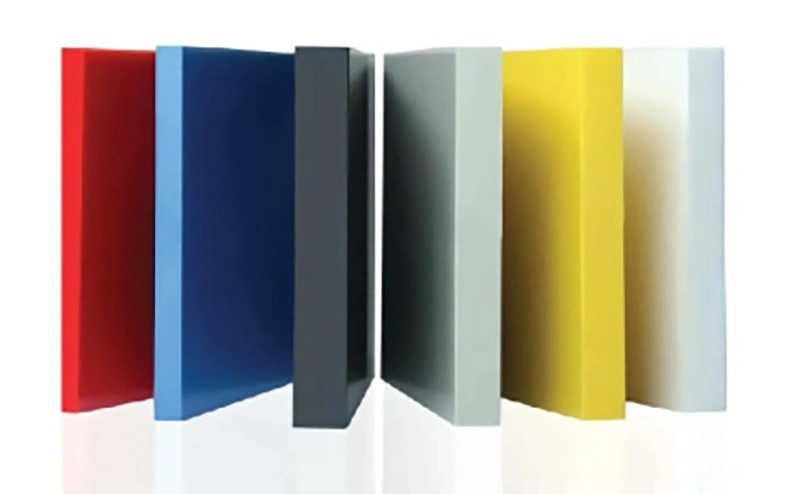
HDPE sheet is extremely strong against impact, abrasion resistant, and exhibits a low coefficient of friction. The material is also moisture, stain, and odor resistant, and is FDA approved for use in the food processing industry (mainly for cutting boards). The material's durability makes it a perfect match for a variety of applications such as water tanks, chute linings, bottle/bottle cap production and numerous other industrial uses. Borated HDPE offers radiation protection in nuclear facility applications.
2.Advantages of HDPE Sheet
The exceptional performance of HDPE sheets stems from their unique molecular structure, specifically manifested in the following aspects:
Outstanding Chemical Resistance: It resists corrosion from most acids, bases, organic solvents, and salt solutions, making it particularly suitable for use in chemical equipment and wastewater treatment systems. However, it is important to note that it is not suitable for environments involving strong oxidizing agents—such as concentrated nitric acid—or specific solvents, such as aromatic hydrocarbons (e.g., xylene) and halogenated hydrocarbons (e.g., carbon tetrachloride).
Excellent Physical and Mechanical Properties: It exhibits superior abrasion resistance and impact strength, maintaining excellent toughness even in low-temperature environments down to -40°C. With a low coefficient of friction and excellent self-lubricating properties, it is well-suited for manufacturing wear-resistant components. Furthermore, its water absorption rate is extremely low (approximately 0.01%), ensuring stable performance even in humid environments.
Good Thermal and Electrical Insulation Properties: It possesses a melting point of approximately 130°C, while its embrittlement temperature can drop as low as -70°C or even -100°C. The typical processing (melting) temperature ranges between 200°C and 260°C. Additionally, it offers excellent electrical insulation properties that remain unaffected by humidity.
Safety and Environmental Characteristics: HDPE sheets are non-toxic, tasteless, and odorless, complying with the hygiene standards required by the food and pharmaceutical industries. Moreover, the material demonstrates excellent physiological inertness and is fully recyclable.
3.Main Types of HDPE Sheets
Chemical and Environmental Sectors: Used to manufacture corrosion-resistant storage tanks, pipelines, valve linings, components for wastewater treatment equipment, scrubbing towers for semiconductor plants, and similar items.
Machinery, Food, and Pharmaceutical Sectors: Used to fabricate wear-resistant and low-friction mechanical components, such as guide rails, gears, bearings, sliders, and conveyor belts. Additionally, due to its non-toxic properties, it is widely utilized in food processing equipment, pharmaceutical packaging, and laboratory apparatus.
Construction and Municipal Engineering: Employed as construction formwork, soundproofing panels, and moisture-resistant boards. In fields such as gas transmission, water supply, sewage disposal, and agricultural irrigation, HDPE sheets serve as essential materials for piping systems.
Other Sectors: In the sports and recreation sector, they are used to construct skating rink surfaces, ice hockey rink boards, and similar facilities; in the power industry, they serve as insulation layers for electrical wires and cables.
If you would like to find out more about hdpe sheet, please contact us at weiten@weitengroup.com, wwww.weitengroup.com.
MOBILE / WHATSAPP86-18561739639
ADDRESSNo.27, Baoyuan Rd, Gaoxin District, Qingdao,China.
 WEITEN GROUP
Copyright © 2026 by WEITEN GROUP All Rights Reserved Designed by HUISHANG MEDIA