
Flange insulation gasket kits are critical components in modern piping systems, providing electrical isolation between flanged connections to prevent galvanic corrosion. These specialized kits are widely used across oil & gas, chemical processing, water treatment, and power generation facilities where dissimilar metals or corrosive environments pose risks to pipeline integrity.
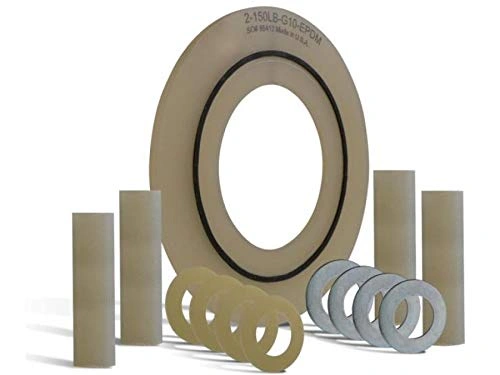
A flange insulation gasket kit is a complete set of components designed to electrically isolate one flange from another while maintaining sealing performance. Unlike standard gaskets, these kits include multiple elements that work together to prevent electrical current from passing through bolted connections.
A typical kit consists of:
Insulating Gasket: Made from non-conductive materials such as G-10, phenolic, or PTFE
Insulating Sleeves/Bushings: Placed inside bolt holes to isolate bolts from flanges
Insulating Washers: Positioned under bolt heads and nuts
Steel Washers: Used to distribute load and protect insulating washers
These components create a complete electrical break, typically capable of withstanding voltages from 500V to over 5000V depending on material selection.
The primary function of these kits is to prevent galvanic corrosion, which occurs when two dissimilar metals contact in the presence of an electrolyte (water, humidity, or process fluids). This creates a battery effect, causing one metal to corrode rapidly.
Common scenarios requiring insulation kits include:
Cathodic protection systems: Preventing current bypass
Dissimilar metal connections: Between carbon steel and stainless steel
Electrolytic environments: Offshore platforms and chemical plants
Stray current interference: Near railway lines or power substations
Without proper isolation, corrosion leads to pipe failure, leaks, environmental incidents, and costly shutdowns.
Oil & Gas: Offshore platforms, refineries, and pipelines rely on insulation kits for corrosion protection in harsh marine environments.
Chemical Processing: Plants handling corrosive fluids benefit from chemical-resistant isolation gaskets.
Water & Wastewater: Treatment facilities use kits to protect cathodic protection systems.
Power Generation: Cooling water and steam lines require isolation for corrosion protection.
Marine: Shipbuilding and offshore platforms face constant saltwater exposure, making insulation gaskets essential.
Component | Common Materials | Key Properties |
Gasket | G-10, Phenolic, PTFE | Chemical resistance, temperature tolerance |
Sleeves | G-10, Phenolic, Polyamide | Dielectric strength |
Washers | G-10, Phenolic | Crush resistance |
Temperature ratings:
Standard: -40°C to +100°C
High-temperature: Up to +230°C (G-10/G-11)
Pressure ratings: Available for ASME Class 150, 300, 600 and higher.
Proper installation is critical for performance:
Clean flange faces thoroughly
Center gasket carefully
Insert insulating sleeves into bolt holes
Place insulating washers under bolt heads and nuts
Follow recommended torque procedures
Test electrical isolation after installation
Important: Never reuse insulation kit components after disassembly—they lose their insulating properties once compressed.
Reputable kits comply with industry standards:
ASTM D149: Dielectric breakdown testing
ASTM D570: Water absorption measurement
ASME B16.21: Gasket dimensions
Common tests include dielectric strength, compression, and hydrostatic testing.
Flange insulation gasket kits play an essential role in protecting piping systems from galvanic corrosion. While often overlooked, these components are critical for long-term reliability and safety. Proper material selection, correct installation, and quality verification ensure optimal performance. As industries prioritize asset integrity, demand for these kits continues to grow.
MOBILE / WHATSAPP86-18561739639
ADDRESSNo.27, Baoyuan Rd, Gaoxin District, Qingdao,China.
 WEITEN GROUP
Copyright © 2026 by WEITEN GROUP All Rights Reserved Designed by HUISHANG MEDIA